


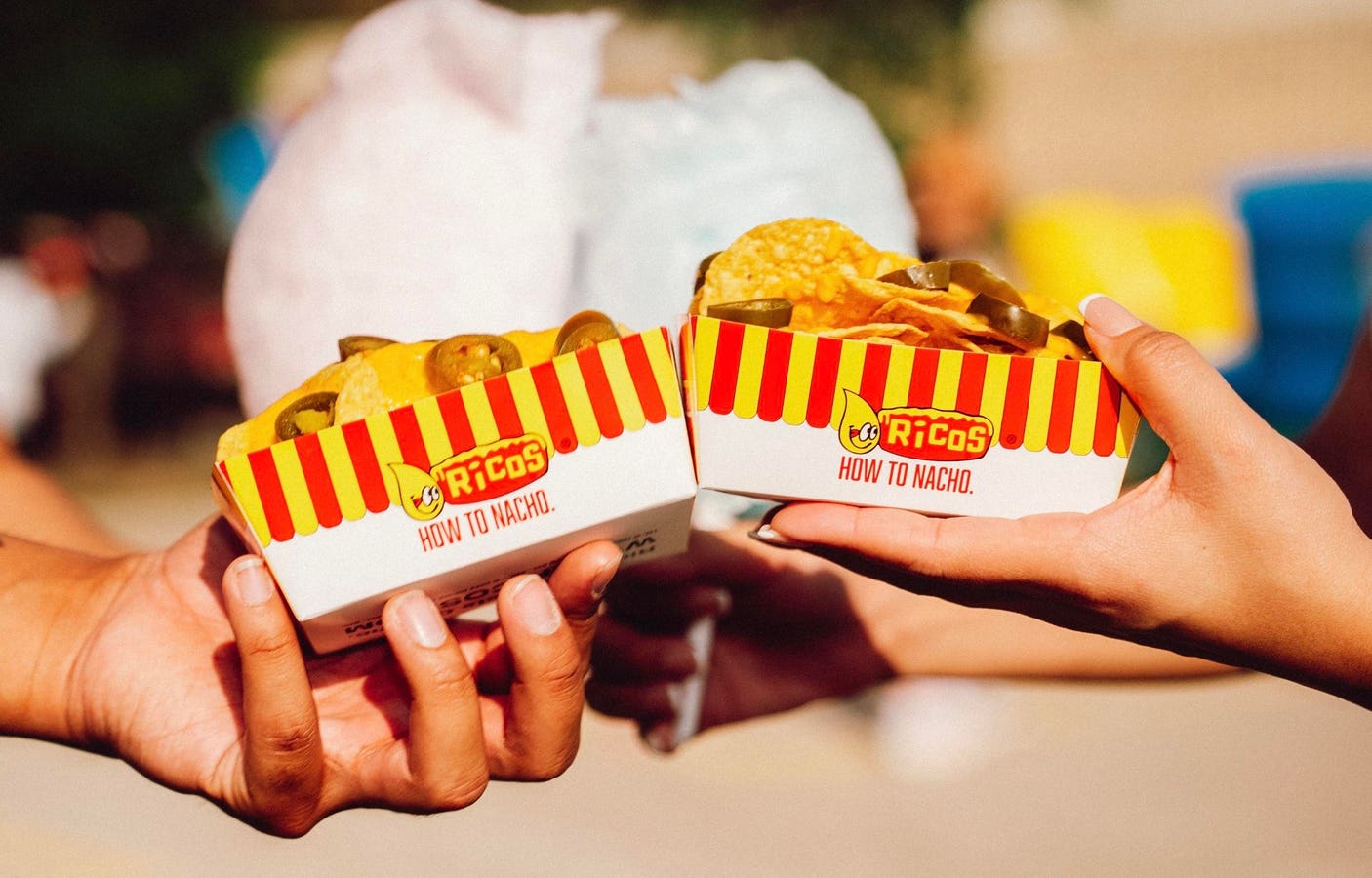
Ooey gooey cheese sauce smothering chips, with a few jalapenos tossed on for good measure, gave sports fans their first introduction to stadium nachos. It all started in Texas, but it hasn’t stopped there, burgeoning from an Arlington Stadium beginning in 1976, home of the Rangers, into a new world of cheese-smothering concoctions.
Frank Liberto created the craze. While nachos were a known commodity in Texas, bringing it into the world of stadiums required Liberto to craft a “cheese sauce” that was shelf-stable and dispensed quickly. The recipe—it’s beyond a closely guarded secret, still to this day—started in Arlington Stadium and quickly made oodles of money for the Rangers, even getting a mention on Monday Night Football as it gained popularity.
MORE: The Stadium History Of Ice Cream
Megan MacDiarmid, Liberto’s granddaughter and vice president of marketing for Ricos, the company Liberto founded shortly after his cheese sauce success, tells me the big change he crafted was making an already melted cheese that just needed concessionaires to add water and jalapeno juice to make it ready to serve. The condensed cheddar formula came in No. 10 cans and expanded, giving a concessionaire 50% more product than what came in the can. “It used to billed the ‘profit maker,’” MacDiarmid says. “It created a profit for the concessionaire. You could buy one can and serve 50% more people. That was the special thing about it, that was the thing that really set it apart. My grandpa was really focused on concessionaires’ focus on making money.”
The pumpable nature of the cheese dispenser made it easy to gush over the boat of chips.
MORE FOR YOU
The recipe has undergone “slight variations” based on changing consumer tastebuds over the decades, she says, but the No. 10 condensed aged cheddar cheese sauce with the yellow label from Ricos is still the original. The ingredient list leads with cheese whey and includes water, vegetable oil, cheddar cheese, nonfat dry milk and a mix of other ingredients, including Yellow 6. The aseptic cooking production process ensures the cheese’s creaminess and taste but eliminates the need for preservatives and seals the sauce fresh in the can, the brand says.
In the first year of the nacho, the pumpable product outsold popcorn—then the leading concession item—more than 10-to-one in Arlington Stadium, in part thanks to the special Liberto nacho carts on the concourse. The success brought it to the NFL in 1978.
MORE: How Sports Embraces Cheese Sponsorships, The New Stadium Cheddar
Now the family-run business sells its products in 81 countries and across entertainment venues—stadiums, movie theaters and amusement parks—and offers variation in dispensing methods, with some venues opting for pre-packaged sauces alongside chips on a trey to speed delivery and control quantities.
While Ricos now has five flavors—the red label features a gourmet cheddar; the blue label is queso blanco; the orange label offers a premium aged cheddar; and the black label is a hot and spicy version—to fit consumer demand, sports is where it all began.
“Nachos are nachos,” MacDiarmid says, “and they are always going to be there.”
The Evolution of Stadium Nachos
Liberto created the mainstay stadium nacho, with a pumpable cheese sauce over chips in a portable container, and that soon became the baseline for nachos. The nacho has since expanded to embrace regional varieties while growing in both size and scope.
“I think nachos have come a long way, not only in size and shareable nature, but from a topping standpoint,” Jamie Slotterback, vice president of marketing strategy and innovation for Aramark Sports + Entertainment, tells me. “Everything in concession has been elevated over the last few years, and nachos is one piece of that.”
Carmen Callo, Sodexo Live! senior vice president and corporate executive chef, tells me that nachos offer a vessel to create on. “I can elevate the chip, change the cheese sauce and add different toppings,” Callo says. “The themes have really stood out. It is endless. The sky’s the limit. You can still get chips and cheese, and people seek that out, but you have your more elevated options.”
The nacho has also become a way to introduce new flavors to the stadium experience. Nachos are now instantly recognizable and something that resonates with fans, allowing them to more easily embrace an unfamiliar ingredient. Plus, it fits the bill as a perfect stadium staple, being portable and shareable. “It is just fun,” Callo says.
Chef Ron Krivosik, Levy culinary senior vice president, tells me that in the early 1980s when cheese sauce really came into play, they were doing tastings on 20 cheese sauces—“which I don’t recommend for anybody”—to find the best they could. They also elevated the chip, working with companies to create and deliver them to a stadium on the same day.
MORE: St. Louis City SC’s Stadium Food Scene 100% Local
Nachos soon become a regional dish, starting with a barbecue variety in Kansas City (Krivosik also fondly remembers a hatch green chili recipe for Denver). “Every city has their own unique nacho,” he says.
The regionality still dominates. Slotterback says every site offers a different fan favorite, even if the South is still the nacho leader generally, while Pittsburgh’s love of the staple chips and cheese dominates the Aramark portfolio (the NFL season is the most popular time for nacho sales, according to Slotterback). In a lesson on regionality, though, Pennsylvania couldn’t differ more, with Pittsburgh the largest nacho-loving site for the company and Philadelphia with nearly a “zero desire for nachos.”
Novel vessels helped increase the shareable measure of a nacho—in 2024 Aramark created a product for NBA and NHL that offered the nacho as a shareable in oversized basketball or hockey pucks full of locally inspired ingredients. “We prompted our chefs and asked them to build their own nacho for their home team,” Slotterback says. “You can put your own regional spin on it pretty easily.” There’s also a 10-inch pizza box serving as a shareable vessel across the country and nachos in a baseball helmet mimics the popularity of the nostalgic ice cream delivery.
That regionality drives both recipes and ingredients. Different cheese is used based on the region and each event puts its own spin on it. Krivosik says it really comes down to what a city demands for its handheld nachos.
What started as a novelty has turned into a regional must-have. “It was something unique, something you weren’t going to get anywhere else, so it became iconic,” Callo says about the birth of the stadium nacho. “It became that comfort food and that is why it has stayed, there is nostalgia, comfort. That is why we still see it today, but now with the next generation of different needs and wants.”