


By Mark Ricci
June 5, 2026
Training Days with the NFL: What OTAs are (and aren’t) in 2026
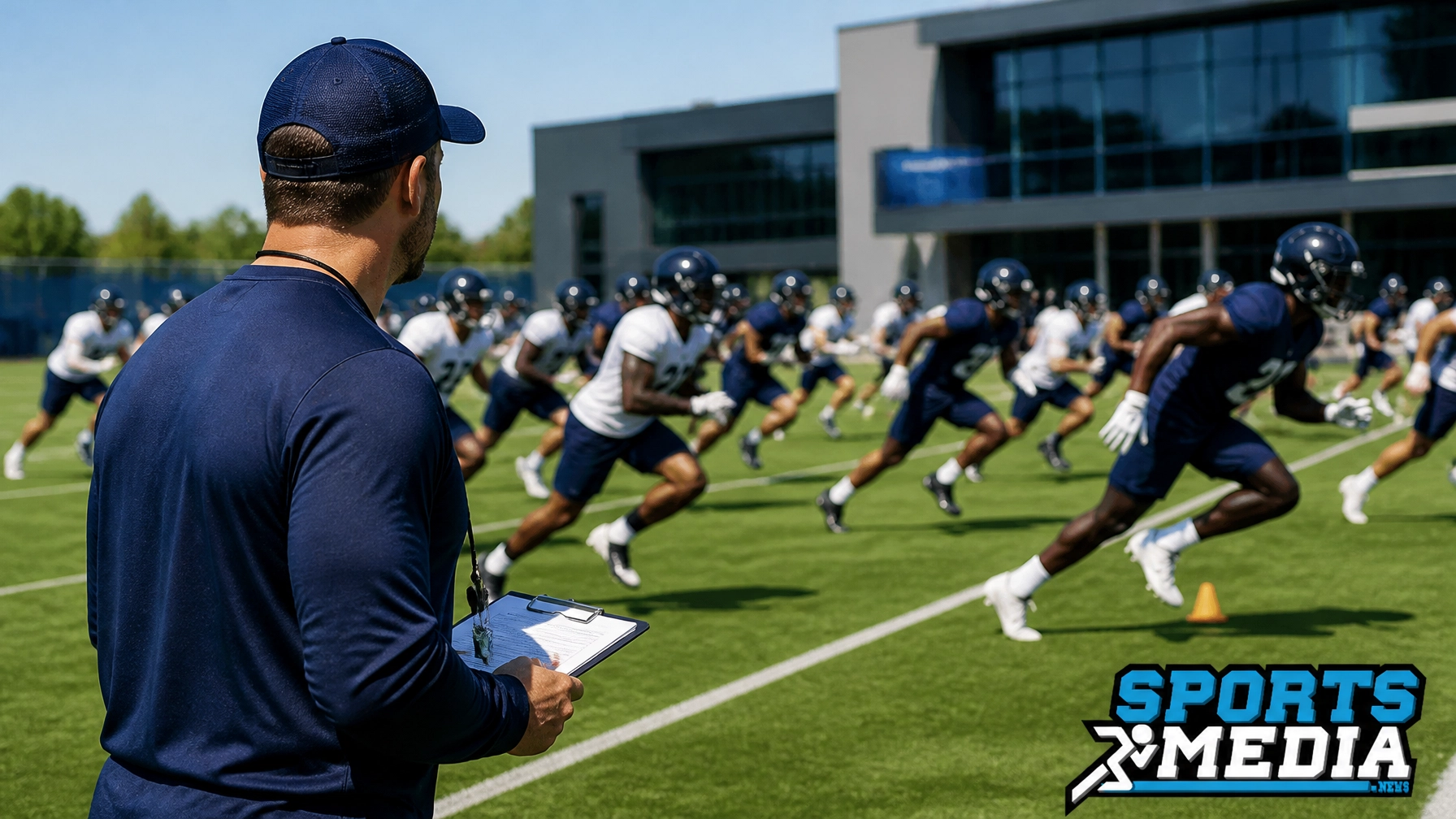
As the calendar turns to June, the focus of the National Football League shifts from the boardroom and the draft podium to the grass fields of team facilities across the country. The 2026 offseason program is now in full swing, entering its most critical phase before the summer hiatus. While the casual fan might view these sessions as light cardio, for the 32 franchises, Organized Team Activities (OTAs) represent the first concrete steps toward a championship.
The current structure of the NFL offseason is a delicate balance of collective bargaining agreements and high-stakes performance management. In 2026, the stakes are heightened by a league-wide wave of coaching turnover and major quarterback transitions that have redefined the competitive landscape.
Phase Three: The rules of engagement
The league’s 2026 offseason calendar and workout rules lay out exactly what teams can and cannot do during this window. Under Article 21 of the Collective Bargaining Agreement (CBA), each club is permitted a voluntary nine-week offseason program divided into three distinct phases. We are currently in Phase Three, the final four weeks of the program.
During Phase Three, teams are permitted to conduct up to 10 days of organized team practice. The structure is rigid: no live contact is permitted. While teams are allowed to run 7-on-7, 9-on-7, and 11-on-11 drills, there is a strict prohibition on tackling to the ground and full-contact team offense vs. team defense.
The timing is strategic. OTAs take place from late May into June, following post-draft rookie minicamps in early May. They lead directly into mandatory veteran minicamps in mid-June, after which players break for five weeks until the grind of training camp begins in late July. Despite the "voluntary" label, attendance remains a primary metric for front offices evaluating player commitment and scheme readiness.
Seeking legitimacy: New QBs and coaching resets
The 2026 OTA cycle is defined by high-profile resets at the league's most visible positions. National coverage has centered on five franchises currently navigating massive structural changes.

In Pittsburgh, the "Steel City" is witnessing the integration of veteran Aaron Rodgers into offensive coordinator Arthur Smith’s system. After Rodgers' highly publicized move to the Steelers, the focus at OTAs has been on the ramp-up. Observers are closely monitoring how the 40-plus-year-old quarterback adapts to Smith’s heavy play-action and under-center requirements.
Meanwhile, the New York Giants have entered a new era under John Harbaugh. The move, which sent shockwaves through sports news circles earlier this year, has turned the Giants' OTAs into a laboratory for culture building. Harbaugh has framed these sessions as a chance to establish a more physical, disciplined identity, even within the CBA's non-contact constraints.
In Baltimore, the Ravens are undergoing a defensive overhaul. With new defensive coordinator Jesse Minter installing his scheme, OTAs have become a race against time to align terminology.
The Atlanta Falcons and Buffalo Bills are also under the microscope. Atlanta is working through the alignment of a new head coach and a new quarterback, using OTAs to ensure that the terminology and expectations on offense are synchronized. In Buffalo, offensive coordinator Joe Brady is refining the attack around Josh Allen, with a specific emphasis on timing and rhythm to mitigate the turnover issues that plagued the team in 2025.
Recovery checkpoints: Injuries and comeback timelines
Beyond the tactical installations, OTAs serve as critical health checkpoints for the league's stars. For players recovering from significant injuries in 2025, these weeks determine whether they will be full participants in August or candidates for the Physically Unable to Perform (PUP) list.
Medical staff across the league use Phase Three to clear players for "football activity," but coaches often remain conservative. Analysis of recent practice reports shows that high-profile skill players coming off ACL surgeries are frequently limited to individual drills.
The rookie surge: Making veterans nervous
With all 32 teams currently holding OTAs, the 2026 draft class is getting its first taste of life against established veterans. It is often the mid-round picks, rather than the first-rounders, who generate the most buzz during these non-padded sessions.

Zavion Thomas, the 3rd-round pick for the Chicago Bears, has reportedly been a standout. The LSU product’s elite 4.28 speed has been on full display during vertical route drills, forcing veteran cornerbacks to respect his cushion even in a walk-through setting. Similarly, Antonio Williams in Washington has drawn praise for his route-running precision, already pressing for a larger role in the Commanders' WR rotation.
The arms race: Position battles fueled by OTAs
While official depth charts rarely change in June, the foundation for August competitions is laid now. The most scrutinized battle resides in Minnesota, where the Vikings’ quarterback competition is a three-way race.
Analysts note that OTAs are where candidates show who is more decisive and more in sync with the primary receiving corps.
 national writers' predictions
Similar battles are brewing across the offensive line and in defensive backfields. These sessions allow groups to rep communication and assignments, with early notes on first-team rotations informing national writers' predictions.
The "Panic Meter": Navigating voluntary absences
Because OTAs are voluntary, absences are a mathematical certainty. However, the reason for an absence dictates the level of concern, or the "Panic Meter," within a front office.

For players like Lamar Jackson, who attended earlier stages of the program but has been absent for certain Phase Three sessions, the panic level remains low. Jackson’s return for later OTA sessions typically signals that his absences are personal or management-related rather than a sign of a contract holdout.
Conversely, players like Jacoby Brissett and Josh Sweat have seen their absences scrutinized through the lens of contract negotiations.
Lasting impacts: Why 2026 OTAs matter more than fans think
Taken together, the 2026 OTAs are performing three vital functions for the league:
- Installing New Identities: Teams like the Giants, Ravens, Falcons, Bills, and Steelers are using these practices to teach culture and terminology before the physical demands of camp begin.
- Quietly Rearranging Depth Charts: Rookies like Zavion Thomas are proving they aren't just "camp bodies" but legitimate challengers for snaps.
- Signaling Stability: The attendance and health of a team's stars provide the first real clues about the stability: or fragility: of their 2026 campaign.
The games don’t count yet, but the reputations and roles being forged on the practice fields this June will dictate the headlines for the rest of the year. As the NFL moves toward the mandatory minicamp phase, the foundation for the 2026 season has been officially laid.
About the Author
Mark Ricci is a veteran sports business journalist specializing in NFL front-office strategy and league-wide labor relations. covering the intersection of athletics and corporate management, Mark provides in-depth analysis on how the business of football impacts the product on the field.