


By Jacob Potter
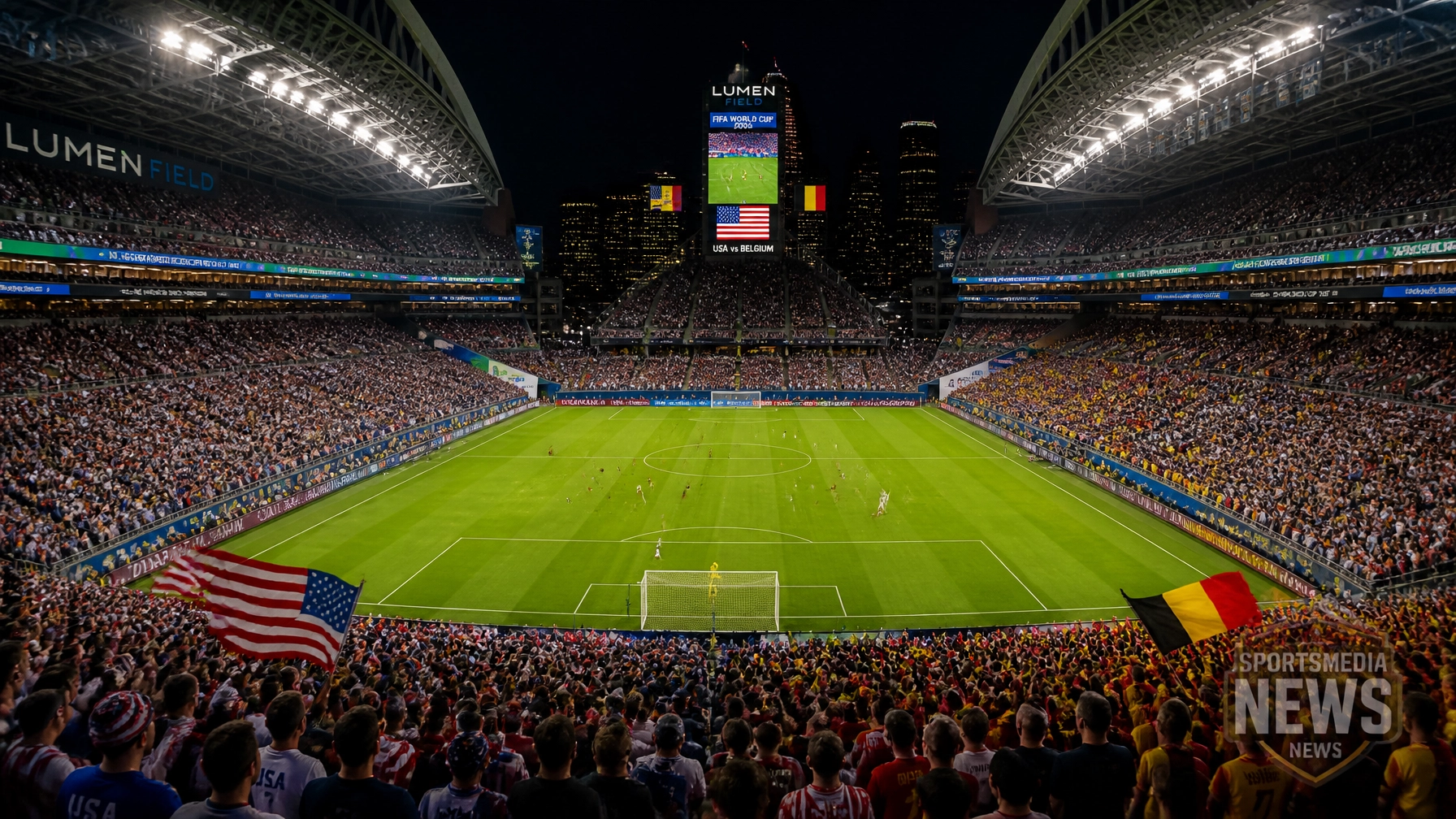
The United States Men’s National Team (USMNT) saw its historic 2026 World Cup run come to a crashing halt on Monday night at Lumen Field in Seattle. In a match that promised a "new era" for American soccer, the clinical efficiency of Belgium proved too much for a young U.S. squad. The 4-1 defeat in the Round of 16 marks a bittersweet exit for the tournament co-hosts, ending a journey that saw the program reach milestones not seen in nearly a century.
Despite the lopsided scoreline, the evening was defined by a mixture of individual brilliance and collective heartbreak. Belgium, led by a masterclass performance from Charles De Ketelaere, systematically dismantled the U.S. defense, while the Americans struggled with injuries and critical errors at the most inopportune moments. As the final whistle blew in the Pacific Northwest, the focus shifted from the immediate pain of defeat to the broader implications for a team that has now set a new standard for victories in a single tournament.
Seeking legitimacy: A bitter Round of 16 exit
The atmosphere in Seattle was electric as over 68,000 fans packed Lumen Field, hoping to see the USMNT advance to the quarterfinals for the first time since 2002. However, the optimism was quickly dampened by a Belgian side that appeared several steps ahead from the opening kickoff. Charles De Ketelaere, the centerpiece of Belgium's attack, was the primary architect of the American demise.
De Ketelaere opened the scoring early, exploiting gaps in the U.S. midfield to find the back of the net. He would go on to score twice and provide a crucial assist, leaving the American backline chasing shadows for much of the first half. The U.S. found a temporary lifeline through a piece of history-making brilliance from Malik Tillman, but the momentum was short-lived.
The second half brought further complications. Christian Pulisic, the talismanic captain of the USMNT, suffered a significant ankle injury and was forced to be subbed off. His absence was felt immediately as the U.S. lost its primary creative outlet. The deficit widened in the 57th minute following a critical error by goalkeeper Matt Freese. An uncharacteristic lapse in judgment allowed Hans Vanaken to capitalize, effectively ending any hopes of a comeback. Romelu Lukaku added a final blow with a stoppage-time goal, sealing the 4-1 result.

Tillman’s historic set-piece prowess
While the team result was disappointing, Malik Tillman carved his name into the record books with a moment of pure technical skill. Tillman’s goal came via a precision free kick, his second of the tournament. This feat makes him the first player since 1982 to score two direct free-kick goals in a single World Cup: a statistic that underscores the rarity of his set-piece talent on the world stage.
Tillman’s ability to deliver under pressure has been one of the bright spots for the USMNT throughout June and July. His first free-kick goal earlier in the group stage provided the necessary confidence for a team that has often struggled to find goals from dead-ball situations.
"Malik has a unique ability to see the angles that others don't," noted one tactical analyst following the match. "To do it twice in one tournament, especially in an expanded field where the pressure is magnified, is nothing short of world-class. It provides a blueprint for how this team can diversify its scoring in the future."
A milestone for American soccer
Despite the Round of 16 exit, the 2026 World Cup will be remembered as a statistical breakthrough for the United States. In this newly expanded 48-team format, the U.S. managed to win three games for the first time in program history. This achievement surpasses the previous benchmark and signals a growing consistency in the team's ability to navigate high-stakes tournament play.
This run represented the deepest the U.S. has gone in a World Cup since the 2002 quarterfinal appearance in Korea/Japan. While the Round of 16 has often acted as a glass ceiling: this being the fourth time the U.S. has lost at this stage since 2002: the manner in which they navigated the group stage and the preliminary knockout round suggested a closing gap with traditional powers.
"The three-win mark is a significant psychological hurdle," says Dr. Elena Rodriguez, a professor of sports management and international soccer consultant. "In the context of a 48-team tournament, the road is longer and more arduous. Reaching this stage with that many wins suggests the 'floor' of the USMNT has been raised, even if the 'ceiling' remains elusive."

CONCACAF's collective struggles
The U.S. exit was part of a larger, more concerning trend for the North American region. All six CONCACAF nations that qualified for the 2026 World Cup were eliminated in the Round of 16. This collective departure has sparked intense debate regarding the region's readiness to compete with the elite of UEFA and CONMEBOL.
The issue is particularly relevant given that the tournament was hosted on North American soil. The failure of Mexico, Canada, and the other regional representatives to push into the quarterfinals suggests that while the middle tier of CONCACAF is improving, the gap at the top remains significant.
"We are seeing a stagnation in the knockout stages for our region," an industry executive commented anonymously. "The infrastructure is there, the investment is there, but the tactical execution in the do-or-die moments still favors the European and South American giants. It’s a wake-up call for the entire federation."
Lasting impacts: The Pochettino crossroads
As the dust settles on the Seattle turf, the future of the USMNT leadership is the most pressing question. Head coach Mauricio Pochettino, who was brought in to provide a high-level tactical overhaul, sees his contract expire this summer. His tenure has been marked by a more aggressive, high-pressing style, but the defensive frailties exposed by Belgium will certainly be part of his performance review.
Pochettino’s arrival was heralded as a major coup for U.S. Soccer, and the historic three-win run will be a strong argument for his retention. However, the nature of the loss to Belgium and the persistent struggle to advance past the Round of 16 may prompt the federation to look at whether a different approach is needed for the 2030 cycle.
"The contract expiration creates a natural inflection point," says marketing expert and soccer analyst Mark Sterling. "Do you double down on the Pochettino project, or do you look for a coach who can solve the specific defensive lapses we saw today? The decision made in the next few weeks will define the next four years of American soccer."

At the same time, the health of the roster remains a concern. The injury to Pulisic is a reminder of the team's reliance on a few key individuals. As the program looks toward the future, expanding the depth of the squad and finding a permanent solution in the goalkeeper position: especially following Freese's costly error: will be top priorities.
Looking Ahead to 2030
The 2026 World Cup has provided the USMNT with its most successful tournament in terms of total victories, yet the familiar sting of a Round of 16 exit lingers.
"There's enough in this group to build on, but leadership and continuity will matter just as much as talent," noted former captain Christian Pulisic.
As the lights dim on Lumen Field, the American soccer community is left to weigh the progress of history against the reality of a 4-1 scoreline.
For more updates on the 2026 World Cup and in-depth analysis of the USMNT’s next steps, stay tuned to Sportsmedia News. You can also explore our latest articles for coverage on the remaining tournament matchups and industry developments.