


By Mark Ricci | July 15th, 2026
Cora Jade and Elayna Black are the same wrestler at different points in her career, but the way she's introduced and how she wrestles under each name highlight real differences in tone, confidence, and status. As Cora Jade, she was framed as WWE's "future star" project; as Elayna Black, she comes across as a more self‑directed, seasoned player in her post‑WWE work.
Introductions: how each persona arrives
Cora Jade's introductions in WWE NXT
As Cora Jade in NXT, her early introductions often leaned into a "young underdog" energy, with commentary emphasizing her youth, her potential, and her love of wrestling over outright dominance. Her debut presentation typically included:
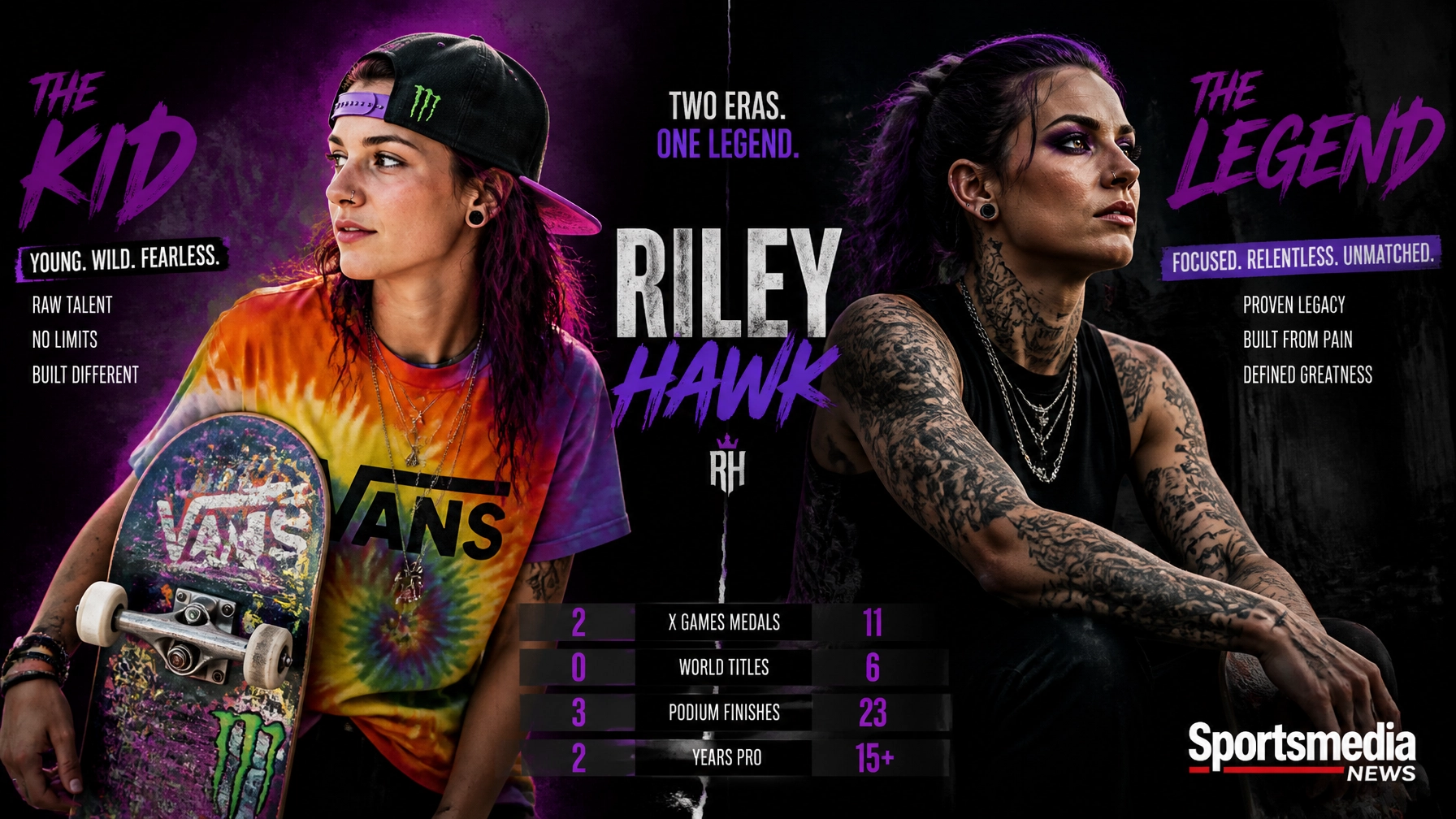
- A skateboarding gimmick and moody, alt‑rock entrance, making her feel like a rebellious teenager stepping onto a big stage.
- Backstage vignettes and character pieces emphasizing how big the opportunity was and how much she wanted to prove herself as part of NXT's future.
Even when she turned heel later, her introductions still framed her within WWE's system: someone fans had watched grow up in NXT, now “breaking bad” but still presented as a long‑term project of the brand.

Elayna Black's introductions after WWE
As Elayna Black outside WWE (on the independents and in TNA), her introductions are less about being a prospect and more about being a dangerous acquisition or a notable former WWE name. Ring announcers and commentary often stress:
- Her history as a former WWE NXT star and experienced indie worker now positions her as a serious threat wherever she appears.
- Her edge and experience: instead of a "wide‑eyed rookie," she's framed as someone who has already been under big lights and now returns with a chip on her shoulder.
Where Cora Jade's early introductions were about potential and youth, Elayna Black's are about credibility and attitude: she is presented less as someone who might matter someday and more as someone who could change a division right now.
In‑ring similarities: what stays the same
Despite the name change, there are clear through‑lines in how she wrestles under both personas:
- Athleticism and bumping: Under both names, she uses her smaller frame to create sympathy and drama: taking big bumps, selling hard for bigger opponents, and showing resilience in extended heat segments.
- Striker‑heavy, hybrid style: Whether as Cora or Elayna, she mixes strikes (knees, forearms, kicks) with mid‑range moves like springboard or second‑rope attacks, reflecting an indie‑influenced approach more than a pure powerhouse style.
- Emotional selling: She leans into facial expressions and body language: showing frustration when a move doesn't work, reacting big to nearfalls: and conveying emotional stakes mid‑match: which carries over across both personas.

These common traits make it clear that Elayna Black isn't a totally new wrestler: she's an evolution of the same performer, with similar tools used in different ways.
In‑ring differences: Cora Jade vs. Elayna Black
Cora Jade in WWE NXT
As Cora Jade, her in‑ring work is shaped by WWE's layout style and her role as either plucky babyface or mean‑girl heel.
Babyface Cora:
- Built around comeback sequences: she would often absorb extended offense, then rally with quick strikes and roll‑up or cradle attempts that fit her underdog role.
- High‑risk moments in big matches (like multi‑woman or stipulation bouts) used to showcase "courage" and heart more than sheer dominance.
- Selling and vulnerability were key focuses, with stories emphasizing her physical and emotional struggles as she tried to climb the NXT ladder.
Heel Cora:
- More taunting and character work between moves: talking trash, mocking opponents, and playing to the camera to underline her “Resident Mean Girl” persona.
- Increased use of shortcuts, like cheap shots or opportunistic attacks, makes her feel sneaky and spiteful rather than overpowering.
Even as a heel, Cora Jade was rarely booked as an unstoppable monster; she came across more as a cunning, emotionally volatile villain who leaned on mind games and timing.
Elayna Black after WWE
As Elayna Black in her post‑WWE run (independents and TNA), her in‑ring demeanor tends to be sharper and more assertive:
- More aggressive pacing: She often opens with offense or immediate pressure, giving the impression she wants to dictate the pace rather than feeling things out as a rookie.
- Less "rookie" body language: She generally projects more composure and confidence, with fewer "wide‑eyed" reactions and more direct focus on the opponent, consistent with how she describes herself as more confident now than during her Cora run.
- Offense framed as deliberate: The same core moves: a knee strike, a dive, a top‑rope attack: feel more like intentional weapons in a veteran's arsenal than last‑ditch gambles from an underdog.
Outside WWE's tightly controlled environment, she also has more room to build match‑to‑match continuity: revisiting spots, referencing prior opponents, and experimenting with pacing in ways that can make her feel like a more layered, long‑term character.

Introductions and in‑ring behavior: key similarities and differences
Similarities:
- Both Cora Jade and Elayna Black are introduced as edgy, alternative characters rather than traditional, glamorous babyfaces, drawing on pop‑punk and alt‑culture imagery.
- Both personas rely on a mix of strikes, mid‑range athletic spots, and emotional storytelling in the ring rather than pure power or pure technical wrestling.
- Both versions lean heavily on attitude: eye rolls, smirks, confrontational body language, as part of their matches and promo segments.
Differences:
- Cora Jade's introductions emphasize youth, potential, and WWE branding, often presenting her as NXT's project for the future. Elayna Black's intros stress independence, experience, and danger, highlighting her as a former WWE star and ambitious free agent.
- Cora's in‑ring pacing is often tied to WWE story beats and big set‑piece moments in NXT, whereas Elayna's post‑WWE work tends to feel more like competitive, back‑and‑forth wrestling shaped by her and her opponents.
- As Cora, she frequently came off like someone proving she belongs on a big stage; as Elayna, she carries herself more like someone who already knows she belongs and is trying to reshape her narrative on her own terms.
How could these aspects affect her future?
The way she's introduced and how she wrestles under each name can shape her long‑term trajectory in major promotions:
Perception as a versatile act:
Promoters and fans can see that she has successfully played both a tightly scripted WWE character (Cora Jade) and a more self‑directed, post‑WWE persona (Elayna Black). That versatility makes her attractive to companies that want performers who can adapt to different television formats and creative philosophies.
Ceiling in different environments:
In WWE, her Cora Jade presentation framed her as a long‑term project, which brought big opportunities but also meant her ceiling depended on NXT and main‑roster booking choices. As Elayna Black on the independents or in TNA, more assertive introductions and in‑ring aggression can fast‑track her into central roles, title pictures, and headline feuds, giving her a chance to prove she can carry a division.

Future returns and rebrands:
If she ever returns to WWE or joins another major promotion, the contrast between a calmer, more confident Elayna Black and the more emotionally volatile Cora Jade could be used in storylines: either by evolving Cora's character or by openly acknowledging her journey away and back. Her post‑WWE growth, especially if it produces strong matches and angles, strengthens her case for a higher‑level run than she had before.
Longevity and identity:
Over time, the version that feels most authentic and sustainable, likely the Elayna Black persona she now controls, may become the defining identity fans cling to. In that scenario, Cora Jade would be remembered as an important chapter in her development, while Elayna Black would be the name associated with her peak years and creative prime.
By leaning into the best parts of both personas- Cora's high‑risk heart and Elayna's confident edge- she can shape a future in which her introductions and in‑ring behavior tell a single, coherent story: a once‑hyped prospect who grew into a fully realized, top‑tier performer, regardless of which promotion she represents.
Mark Ricci is a senior contributor for Sportsmedia News, covering professional wrestling, combat sports, and the business of sports entertainment.