


By Dan Kost
Sim racing has changed a lot over the past few decades. It originally drew influence from both arcade machines and home computer games. Arcade titles like Daytona USA made racing more accessible, while early PC simulations started to focus more on realistic driving physics.
By the mid-1990s, consumer racing wheels like the Thrustmaster Formula T1 brought a more authentic driving feel into people’s homes. These early devices created a shift toward more immersive and realistic simulation.

What Racing Simulators Actually Teach Drivers
Before a driver turns the wheel on a real racetrack, the majority of modern training happens elsewhere. In Formula 1 and other well-known motorsport series, simulators are used on a regular basis to prepare for race weekends, learn circuits, and support car development. What started as a support tool has become a large part of how teams operate, with simulation now very connected to real-world performance.
Simulation tools are also being implemented in driver education programs like Drive Fear Free to help users build awareness and decision-making skills in real driving scenarios.
What a Simulator Actually Is
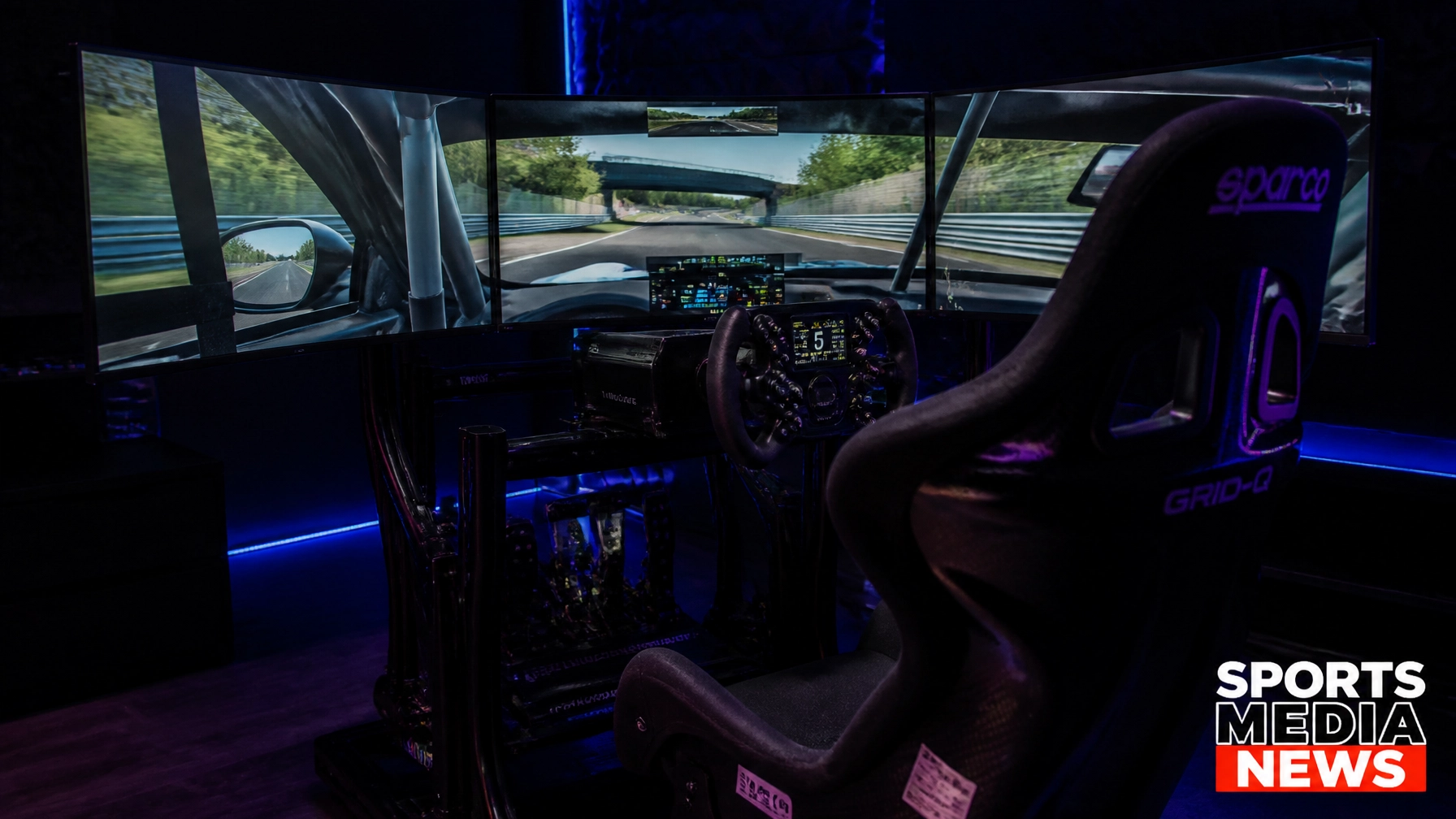
Modern racing simulators used by Formula 1 teams are built from real-world data and track modelling. Circuits are often recreated using laser-scanned layouts, allowing drivers to experience accurate corners, braking zones, and surface conditions in a digital environment.
These systems combine steering rigs, pedals, and advanced physics software to replicate driving inputs. Consumer platforms like iRacing are widely known in esports, while professional team simulators go further by incorporating live vehicle data and engineering feedback to match real car behavior as closely as possible.

From Simulation to Competitive Racing
Sim racing has also grown into a competitive sport. What began as an online community has developed into a structured, professional environment that now mirrors traditional motorsport.
One of the clearest examples is the eNASCAR Coca-Cola iRacing Series, which brings together top drivers from around the world to compete in a full-season championship on the iRacing platform.
The series is supported by teams, sponsors, and live broadcasts, with drivers competing in organized events that resemble real-world motorsport structures. Many competitors now race in live events in front of audiences, showing how far sim racing has evolved beyond its early roots.
Australian sim racer Josh Rogers has described how the sport has changed, noting that sim racing has become more professional and structured over time. He also emphasizes that success depends less on real-world driving experience and more on reaction time, strategy, and understanding how the system works.

Where Simulators Still Fall Short
Even with advanced technology, simulators cannot fully replicate real-world driving. Physical forces like G-forces, tire degradation feel, and unpredictable track conditions remain difficult to reproduce accurately. Real racing also introduces pressure, fatigue, and environmental variables that simulation cannot fully capture.
For this reason, simulators are used as a supplement rather than a replacement for real-world driving experience.
Sim racing has evolved from simple arcade inspiration into a highly realistic and structured system that now plays a major role in both motorsport training and competitive racing. Tools like iRacing and leagues such as the eNASCAR Coca-Cola iRacing Series show how far the space has developed, with drivers now competing professionally in fully organized virtual championships.
At the same time, simulation is also shaping how people learn to drive outside of motorsport, including in programs like Drive Fear Free, where controlled environments are used to build awareness and safer decision-making.